A 2026 guide you can actually use
How much do solar panels cost? A simple question, perhaps, but if you’ve gone looking for the answer, you’ve probably come back with a range wide enough to be basically useless. One site says $4,000. Another says $10,000. Both are technically right – and that’s the problem.
That’s why we’ve designed this guide differently. Because if you work through the steps in order, by the end you’ll have a rough but realistic cost estimate for your own situation – based on:
- Your home
- Your usage
- What’s available in Brisbane right now.
Step 1: Work out what size system you actually need
System size is measured in kilowatts (kW) and is the single biggest factor in what you’ll pay.
The most common system installed in Brisbane homes is a 6.6kW system.
- It suits the average household
- It fits within standard grid export limits
- It hits the sweet spot between output and cost.
But your situation might point to something different.
As a rough guide:
Small household of 1-2 people with low usage: 3-5kW
Average household of 3-4 people: 6.6kW
Large household or high usage with a pool, EV, ducted air con: 10kW-plus.
If you’re not sure, pull out a recent power bill and look at your daily average usage in kilowatt-hours (kWh). A 6.6kW system in Brisbane generates roughly 26-28kWh on a good day.
Write down your estimated system size.
Step 2: Get a baseline cost
A 6.6kW system in Brisbane typically costs between $5,000 and $6,000 fully installed after the federal rebate. A 10kW system generally runs $8,000 to $10,500. These are mid-range quality figures, featuring decent panels, a reputable inverter, and professional installation.
Here’s a quick reference:
3kW: $3,000-$4,000
5kW: $4,000-$5,000
6.6kW: $5,000-$6,000
10kW: $8,000-$10,500.
A useful rule of thumb: Budget around $1,000 per kW installed for a decent quality system.
Write down your baseline estimate.
Step 3: Factor in the federal rebate
The federal government’s Small-scale Technology Certificate (STC) scheme reduces your upfront cost automatically – your installer applies it at point of sale, so the prices above already include it.
For a 6.6kW system in Brisbane, the STC rebate is worth approximately $2,400-$3,200. Brisbane sits in Zone 1, which means higher rebate values than in southern states.
One thing worth knowing: on 1 January 2026, the deeming period for STCs dropped from six years to five, which reduced the rebate value for a standard 6.6kW system by roughly $500-$600 compared to the previous year. The scheme steps down annually until 2030, so installing sooner is marginally better than waiting.
Step 4: Decide on panel quality
Premium systems using high-efficiency panels and branded inverters generally cost 20-30% more than standard systems.
Budget panels still offer solid performance with a lower upfront cost, and are widely installed by reputable companies across Brisbane
Mid-range, though, is the sweet spot for most households – good efficiency, reliable warranties, and still a reasonable price.
Premium panels offer the highest efficiency and longest warranties – more than worth it if roof space is limited or longevity is the priority.
So: If your Step 2 estimate was $5,500 and you’re going premium, add 20-30% – so budget closer to $6,600-$7,150.
Write down your adjusted estimate.
Step 5: Account for roof & installation complexity
Most Brisbane homes are straightforward installs – single-storey, standard pitch, accessible roof. That’s reflected in the pricing above.
But you’ll need to add in some cost if your situation includes:
Two-Storey Home: Additional labour, typically $300-$600 extra
Steep or Complex Roof: Can add $500-$1,500 depending on access required.
Tile Roof (vs Colorbond): Tile work takes longer, expect a small premium.
Switchboard Upgrade Required: Older homes sometimes need this, add $800-$1,500.
Write down your further-adjusted estimate, factoring in solar panel installation cost.
Step 6: Are you adding a battery?
Adding a battery takes your solar system to the next level – instead of exporting excess power to the grid for minimal return, you store it and use it yourself when it counts.
At current Queensland feed-in rates of around 5c/kWh – among the lowest in Australia – storing excess solar for evening use saves significantly more than exporting it. A battery effectively turns your daytime generation into evening savings, reducing what you draw from the grid during the most expensive hours of the day.
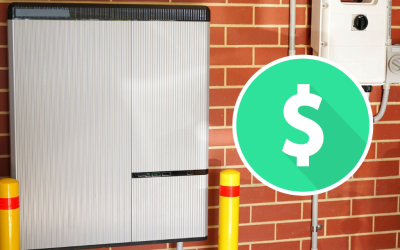
A quality 10-14kWh home battery system typically costs $8,000-$13,000 installed after the federal rebate in 2026. It’s a bigger upfront number, but for households with higher evening usage, it’s an investment that compounds on top of your solar savings.
If adding a battery, add in that cost.
What does it cost to install solar panels in Brisbane?
So: Is it worth it?
For most Brisbane households, yes – and the numbers back it up. Brisbane receives an average of 5.8 peak sunlight hours per day, and a typical 6.6kW system generates around 10,479kWh of electricity annually, saving roughly $2,000 on power bills each year at current rates.
How much do solar panels cost in Brisbane … really? At the end of the day, the figure you end up with is actually only part of the picture – what matters is what you get back. With an average system cost of $4,000-$6,000 for a 6.6kW installation after rebates, Brisbane homeowners typically recoup their investment within 3-5 years. After that, you’re generating free electricity for the life of the system.
If you’re asking how much do solar panels cost in Queensland across the board, Brisbane is actually one of the cheapest capitals to install in – because of high installer competition and a straightforward grid approval process keeping prices competitive.
Already have solar? It might need attention
How much do solar panels cost to install? We hope we’ve helped to answer the question for you – but we’d be more than happy if you got in touch for some really personalised advice.
Already got solar? If your system is a few years old and not performing the way it used to, the issue is often fixable:
- A faulty inverter
- A degraded panel
- A wiring fault rather than an end-of-life system.
Solar Repair Brisbane diagnoses and repairs existing systems across Brisbane and surrounds. If your output has dropped or your system has stopped working altogether, get in touch before assuming you need to replace the whole thing.