Are you sitting there, keen to jump on the solar bandwagon, but wondering: What size solar system do I need? It may seem really complicated – but it actually shouldn’t take more than a few minutes to get a pretty good idea.
Most online tools either oversimplify it into a useless guess or bury you in technical detail you don’t need yet. This guide sits right in the middle – 4 straightforward steps that take your actual situation and turn it into a sensible system size … in plain English.
Step 1: Find your daily usage
Everything starts with one number: how much electricity your household actually uses, on average, per day.
So grab a recent power bill – you’re looking for your average daily usage in kilowatt-hours (kWh), and you should see it somewhere on the summary page.
Can’t find it? Just divide your total usage for the billing period by the number of days it covers.
Got a number? Let’s see where you land in one these four bands:
Under 15 kWh/day: You’re likely smaller household, or a home with efficient, modest usage.
15-25 kWh/day: A typical family home, running standard appliances.
25-40 kWh/day: A larger household, or a home with above-average usage.
40+ kWh/day: This is a pretty big home, or one already running a pool, ducted air conditioning, or other heavy electrical loads.
Sound about right? It’s this single number that does most of the heavy lifting in terms of working out what size solar system do I need for my house.
Let’s keep moving on, but everything from here is just refinement…
Step 2: Adjust for what’s coming
Think of your current bill as a reflection of your current life. But solar systems are a long-term investment, so it’s worth thinking a year or two ahead.
Are you planning to:
- Install a pool?
- Buy an electric vehicle?
- Add ducted air conditioning?
In other words, are you intending to meaningfully increase your household’s electricity use in the near future? If so, move yourself up one band from wherever Step 1 placed you.
It costs very little extra to size for this now, compared to the cost and hassle of adding more panels down the track once your roof space and inverter capacity are already accounted for.
If nothing significant is changing, stay where you are and move on to Step 3.
Step 3: Match your band to a system size
Now we’re really starting to get closer to the answer. Because each usage band lines up with a sensible system size range for most Australian homes:
A smaller household: 5-6.6kW system.
Typical family home: 6.6-8kW system.
Larger household: 8-10kW system.
Big home/pool/EV: 10kW or larger.
So: What size solar system do I need Australia wide? You should now have your rough answer – based on typical power generation and usage patterns.
It’s not the final word – that comes with a proper site assessment – but it’s a genuinely useful starting point for comparing quotes and not getting talked into something far bigger or smaller than you actually need.
Step 4: Check your roof can actually fit it
A system size on paper means nothing if your roof can’t physically accommodate it.
As a rough guide:
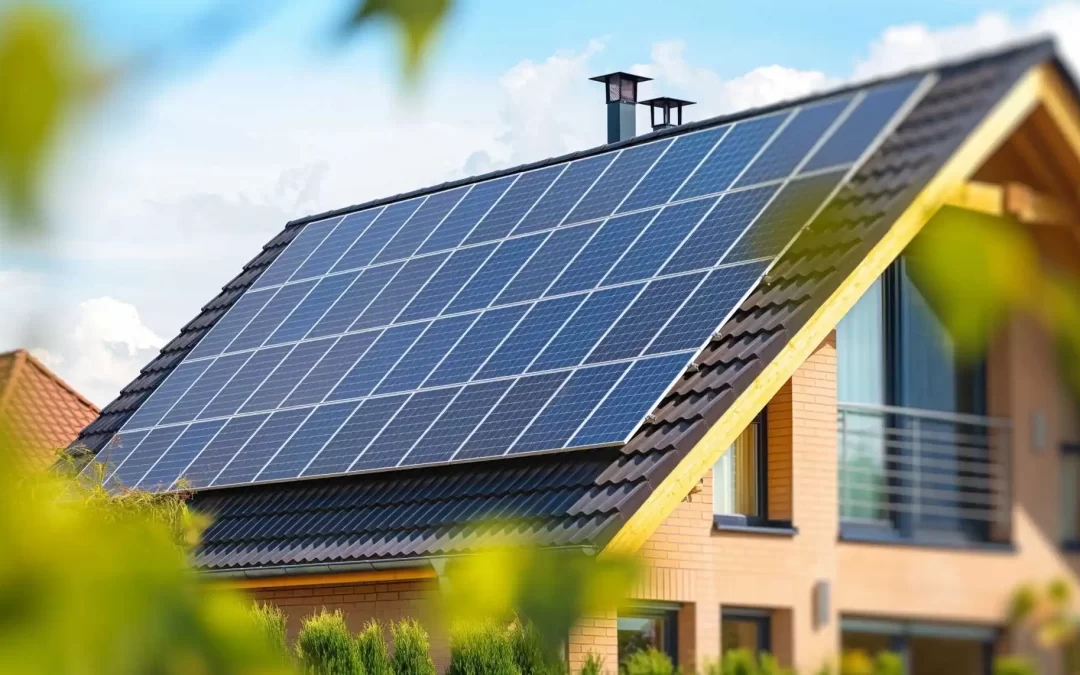
- A 6.6kW system needs around 33 square metres of usable roof space.
- A 10kW system needs around 50 square metres.
- Larger systems scale up proportionally from there.
“Usable” is the keyword. North-facing roof sections perform best and are prioritised first. East and west-facing sections still work well, just with generation shifted toward morning or afternoon. South-facing sections are the weakest performers and are often left out of the calculation, used only if there’s no better option. Shading from trees, chimneys, or neighbouring rooflines reduces the usable space further, regardless of which direction a section faces.
Do you think your roof could be smaller or more shaded than ideal? If so, it’s possible your Step 3 answer might need adjusting – and it’s exactly the kind of thing a licensed solar electrician can confirm quickly during an on-site visit.
That’s it – 4 steps, 1 sensible answer
But be aware: you won’t get the exact watt-for-watt perfect system size from a guide like this, and no What Size Solar System Do I Need Calculator – however slick – can account for:
- Your specific roof
- Your specific shading
- Your specific appliance mix.
For that, you’ll need an expert to actually look at your property.
And one more thing worth knowing!
If a solar battery is part of your plans – now or down the track – it’s worth factoring that into your solar sizing from the start, since a bigger array makes far better use of stored capacity than retrofitting one on top of an undersized system later.
With the federal Cheaper Home Batteries Program currently reducing the upfront cost of battery storage, now is a particularly good time to size your solar with a future battery in mind – even if you’re not installing one immediately.
Want the exact number for your home?
A guide can only take you so far. For an answer that’s actually specific to your address – not a generic estimate – get in touch with Solar Repair Brisbane.
Our licensed solar electricians provide free, no-pressure assessments and fast quotes, with experience across all major brands including Sofar, Fronius, Growatt, Fox ESS, Enphase, and ABB.
Call or request a quote online today.